
Should I run sprinklers longer to fix dry spots?
Not before checking coverage, pressure and equipment. More run time can waste water elsewhere without solving the underlying problem.
Give each part of your landscape a watering plan that fits the plants, exposure and equipment—not simply a longer run time.
Whether you’re installing a new system or fixing leaks and valves, we focus on water-wise layouts that match plant and turf needs.
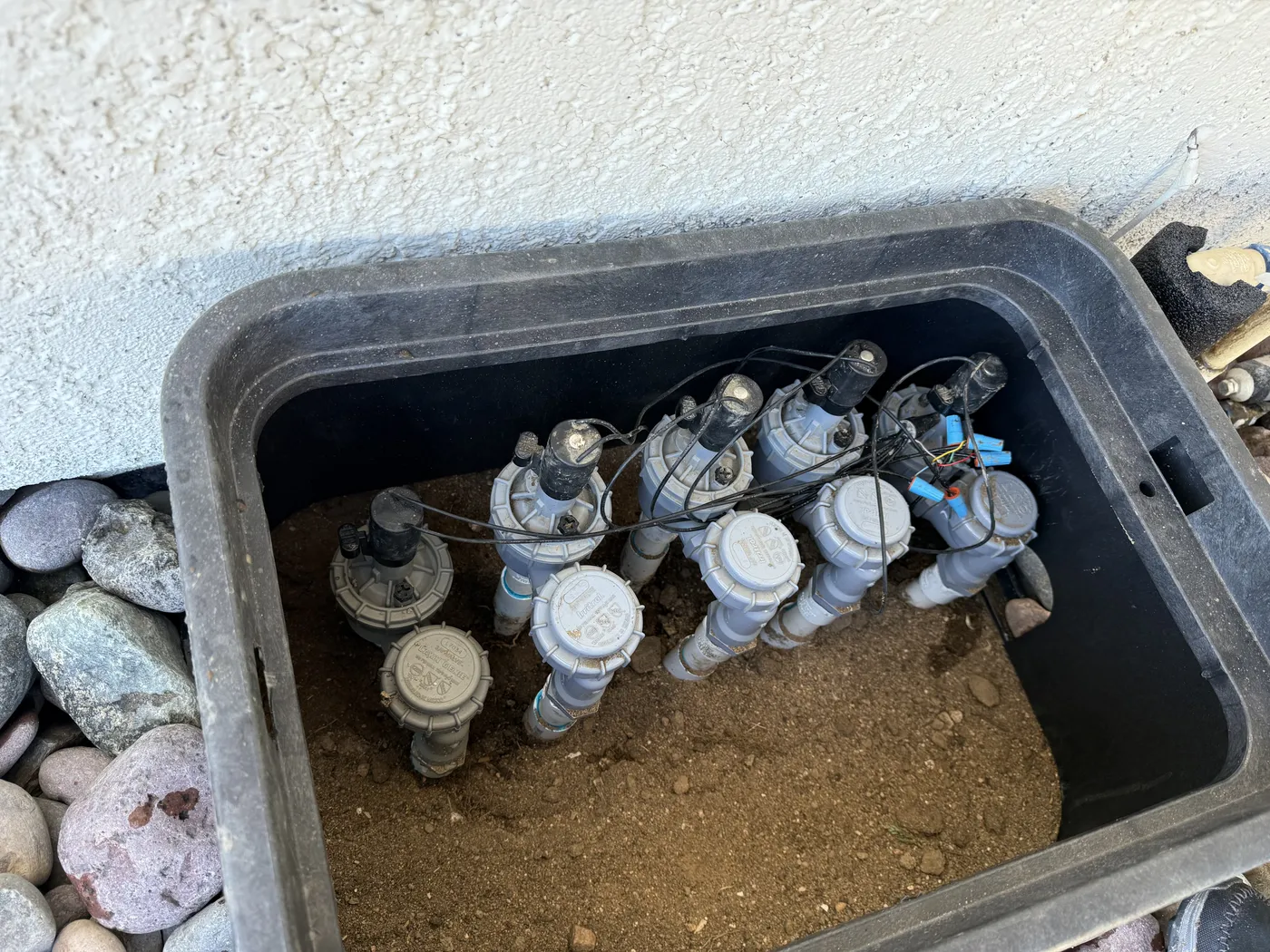
Process photos from real jobs show trenches, valve boxes, and regulators — the parts that matter underground.
Dry spots, pooling water, overspray and a zone that will not turn on can have different causes. A broken head, valve problem, pressure issue or damaged pipe should be diagnosed before replacing an entire system. Tell us when the issue happens and which zones are affected; photos or a short description can help frame the visit.
An estimate may cover damaged lines, valves, heads, drip components or adjustments for a changed landscape. A new layout should consider plant needs, pressure, zone separation and access for future maintenance. Turf removal or a rock conversion may still leave trees and shrubs needing irrigation, so avoid shutting off an entire zone without reviewing what it supplies.
Hot, dry periods and cold-weather exposure can stress irrigation in different ways. Controller schedules should follow current local watering rules and actual plant needs. Watch for leaks after freezing conditions and check emitters or heads for blockage. No fixed schedule suits every property or every season.
Share your city, the controller location, affected zones and whether you can safely shut off water if a leak is active. We discuss irrigation needs across Hesperia, Apple Valley, Victorville, Adelanto and Spring Valley Lake. Electrical, backflow or other regulated work may need an appropriately qualified professional; the estimate should identify those boundaries.


Not before checking coverage, pressure and equipment. More run time can waste water elsewhere without solving the underlying problem.
It may, depending on plant needs, pressure, filtration and layout. Discuss each planting area rather than assuming one emitter pattern suits everything.
If safe and you know the correct isolation point, stop the affected irrigation supply. Avoid unsafe electrical areas and tell us what you observed when requesting help.
No. Exposure, plants, soil and current water-provider rules differ. A schedule needs adjustment over time rather than a universal year-round setting.
Serving Hesperia, Apple Valley, Victorville, Adelanto, Spring Valley Lake, Oak Hills, Phelan and nearby High Desert communities.
Call or text 760-229-8370 for a free estimate. See estimate contact options.